Architectural Texture. From Eave to Ridge. Clay and concrete are different materials, and both can be formed into more than one roofing shape. Curved barrel profiles, interlocking S-shaped tiles, and flatter profiles create distinct rooflines. The material, attachment method, and supporting components determine the complete specification. Begin with the architecture of the home and the condition of the existing roof. Then confirm the selected tile’s weight and structural suitability. If you want a barrel-tile appearance with a composite covering, explore Brava Spanish Barrel Tile as a separate option. Fired-clay products offer distinctive texture and finish options. Compare the actual tile, proposed profile, and accessory pieces—not just a terra cotta color name. Concrete products are molded into different roof shapes and finishes. Confirm the product’s actual weight, fastening, and underlayment requirements rather than assuming every concrete tile is lighter than clay. A flat profile can suit contemporary rooflines; barrel or S-shaped profiles create deeper curves. Valleys, ridge pieces, rakes, and eaves need to be planned for the chosen shape. Use the differences below to frame your questions. Final suitability, specifications, and pricing depend on the selected product and your property. Underlayment, flashings, valleys, and transitions deserve as much attention as the tile surface. An existing tile covering can look sound while the supporting water-management details need work. The attachment schedule and accessories depend on the tile, roof geometry, wind design, and applicable approvals. Ask how eaves, hips, ridges, walls, and penetrations are addressed in the written scope. Use the exact product weight and the supporting structure in the review. Do not choose clay, concrete, or composite solely from a general weight range printed in a sales brochure. Manufacturer documents are the reference for current technical requirements. Product availability, installation capability, and any credential-dependent warranty options are confirmed for your project before contracting. A tile roof estimate should separate the covering from the supporting work. Tile removal and reuse, deck repairs, and waterproofing can change the project even when the visible profile stays the same. Planning a full change? Review our roof replacement process. For isolated damage or a leak, start with roof repair. Arrange professional access that limits unnecessary foot traffic and tile breakage. Keep valleys and gutters clear, inspect flashings, and address displaced or damaged pieces. Cleaning methods should follow the selected manufacturer’s guidance. No. Compare the actual products and roof assemblies. Material names alone do not establish the load. Sometimes. Condition, handling losses, compatibility, and availability of replacement pieces need review alongside the underlying roof work. Not necessarily. Underlayment, flashings, penetrations, and drainage details can be responsible. Start with a roof repair assessment. Unplanned access can break tiles or create a safety risk. Use a qualified professional and the manufacturer’s access guidance. Provide the exact material, profile, color samples, accessory appearance, and any documentation the community requires before ordering. No. It is a composite product with a barrel-tile appearance. Its assembly and product documentation are different from clay or concrete. After hail or wind, explore storm restoration and our Claims resources. Independent agents can visit our insurance agent resource page; real estate professionals can review roofing support for Realtors. Serving homeowners across North Texas, including Plano, Allen, McKinney, and Fort Worth. Check our service areas for your property. Tell Nortex about your current roof, the look you want, and any leaks or storm concerns. We’ll discuss the options and the next step for your property. Explore product ratings, wind and algae protection, and included or upgraded warranty coverage. Build a shortlist to discuss with Nortex. (469) 793-0529
Menu
Tile Roofing
Explore clay and concrete tile with the structural review, underlayment, and flashing details a tile roof needs.Tile Is a Material and a Profile
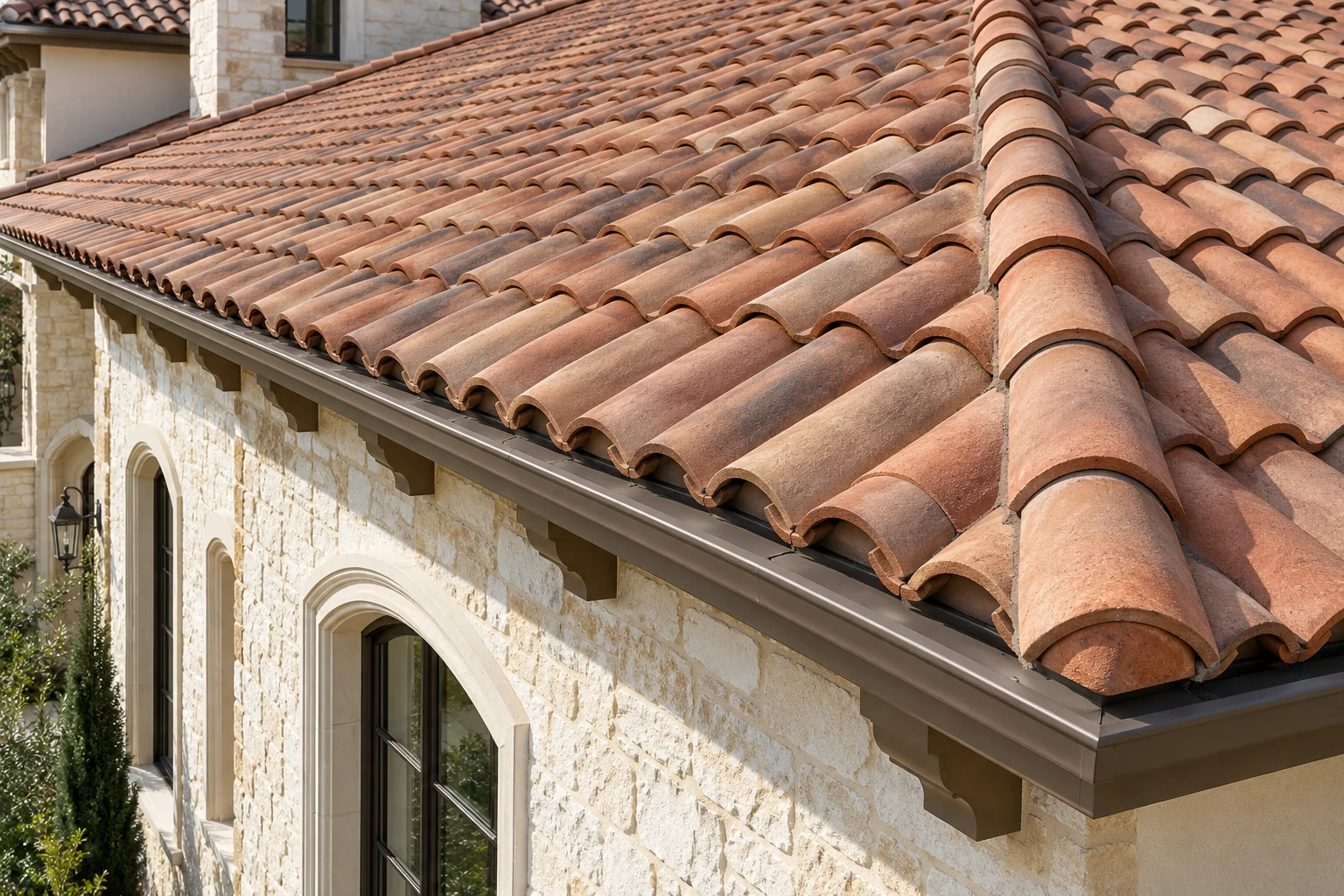
Choose the Look. Understand the System.
Clay / Terra Cotta
Concrete Tile
Flat and Curved Profiles
Compare What Matters to Your Home
Decision Clay tile Concrete tile Composite barrel tile Material Fired clay Cement-based product Manufactured composite Profile choices Flat and curved options Flat and curved options Brand-specific barrel profile Structure Check selected tile load Check selected tile load Check selected assembly load Water management Underlayment and flashings Underlayment and flashings Manufacturer-specific assembly Repairs Compatible tile and careful access Compatible tile and careful access Matching product and accessories The Details Beneath the Surface
The Waterproofing Beneath the Tile
Fastening and Accessories
Structural Suitability
Compare the Scope, Then the Price
What Changes the Estimate
Plan for Care After Installation
Before You Choose Your Roof
Is concrete tile always lighter than clay?
Can the old tiles be reused?
Does a leak mean the tile itself failed?
Can I walk on a tile roof?
What should an HOA submission include?
Is Brava Spanish Barrel Tile clay?
Other Options Worth Exploring
Make Your Roofing Choice With a Clear Plan
See How Your Options Compare.
Tile Roofingnortexusa32026-10-30T10:58:59+00:00
ROOFING SYSTEMS · DALLAS–FORT WORTH
THE MATERIAL & THE HOME
PROFILES & OPTIONS
SIDE-BY-SIDE COMPARISON
SPECIFICATIONS & INSTALLATION
Ludowici tile care and installation FAQs ↗︎US Tile technical resource library ↗︎Roofing components and accessories ↗︎
PROJECT COST & LONG-TERM CARE
HOMEOWNER QUESTIONS
CONTINUE YOUR COMPARISON
YOUR HOME. YOUR NEXT STEP.
COMPARE WITH CONFIDENCE